29 September 2026 · Liner notes
Before my voice went looking for someone, Riccardo had written the journey.
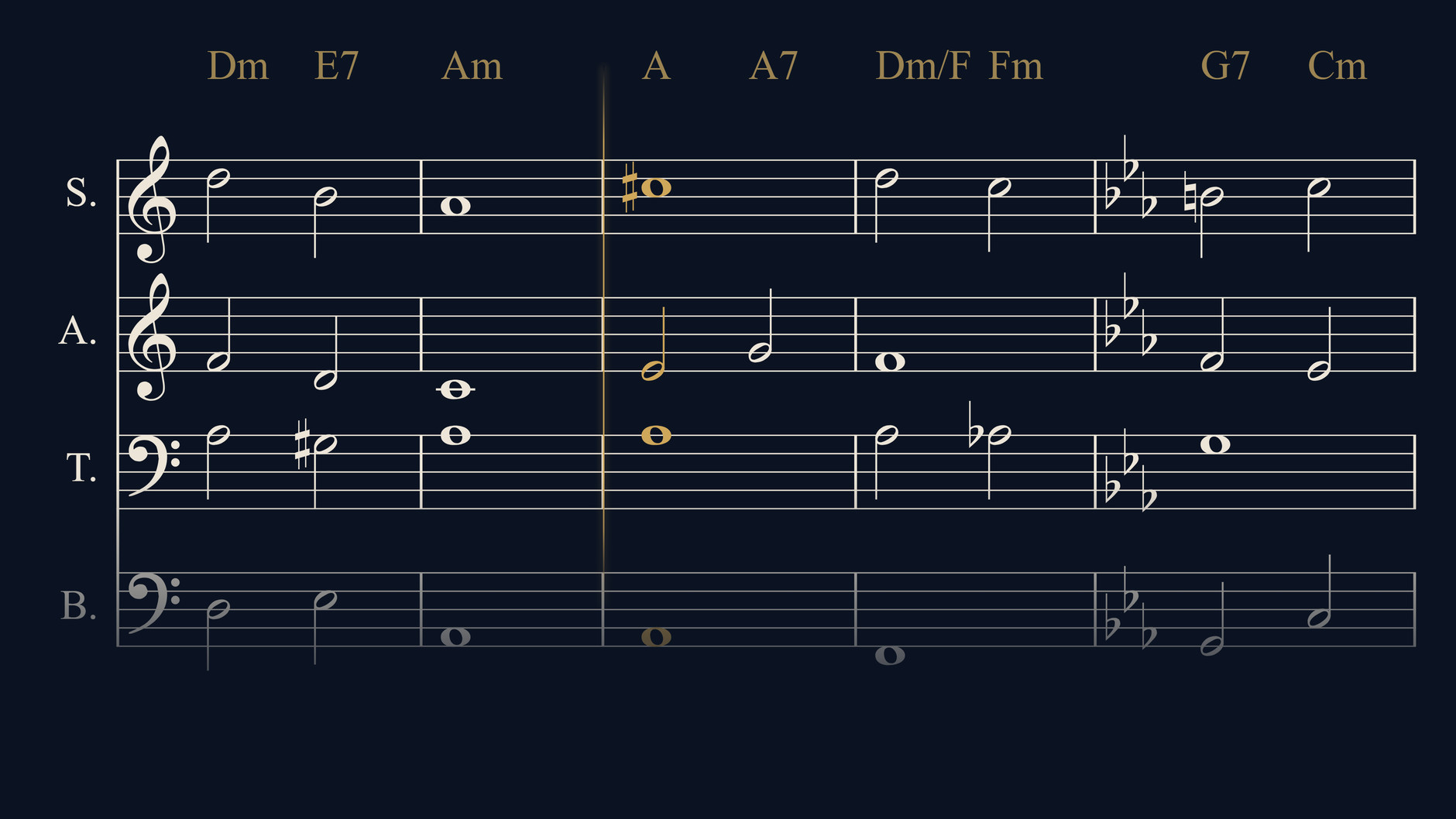
He had gathered it into thirty-two bars, on the screen of a phone. In Flat he had laid out four parts: soprano, alto, tenor and bass. The first title was Il sogno e il ritorno, The Dream and the Return. The words would come later.
He told me it often begins this way: his hands on a keyboard, in the study where he works. He looks for a harmony, follows it, lets it show him where it can go. Only then does he write it down. When the words and the melody arrive, they find a place already waiting for them.
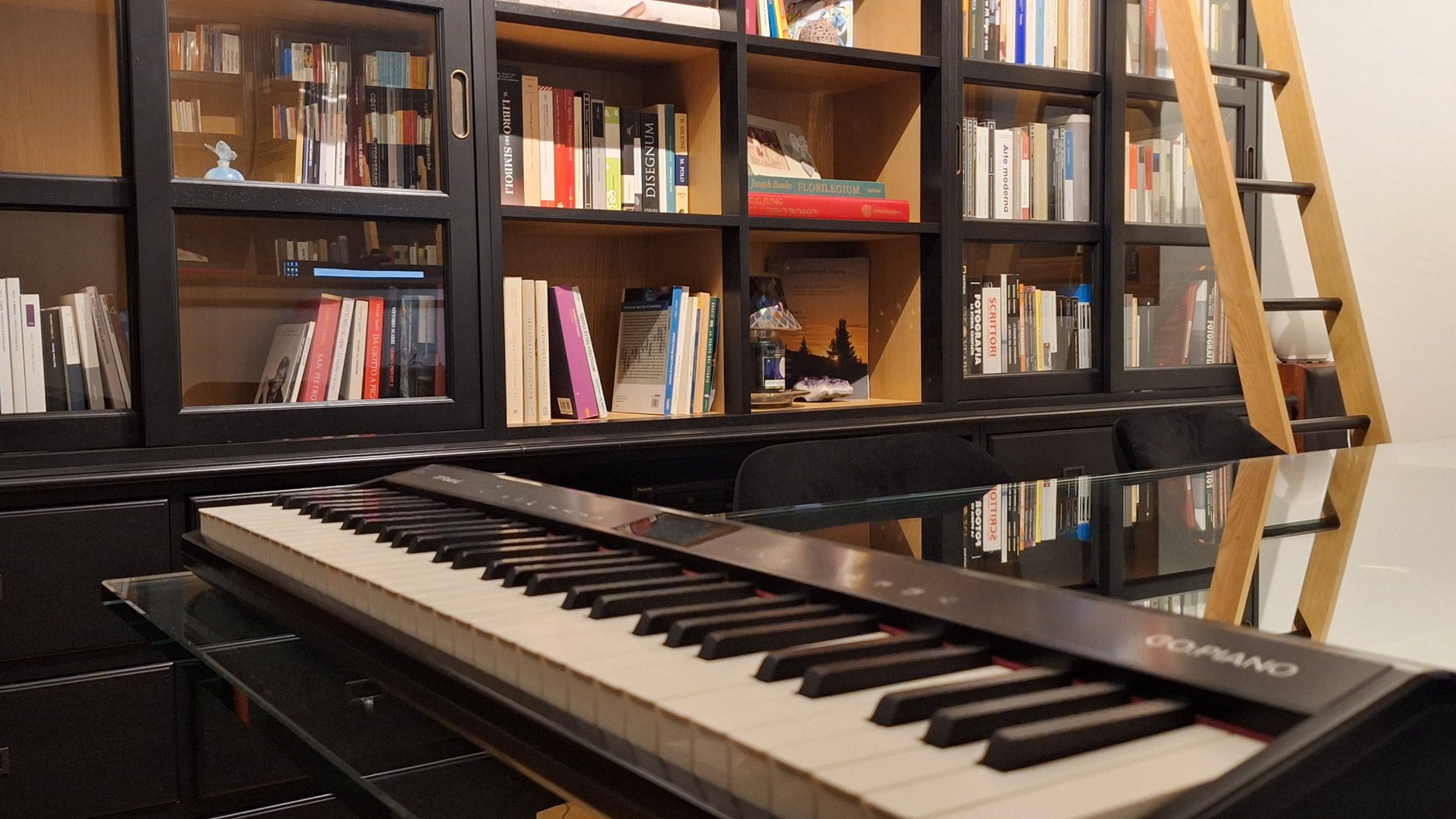
Of that beginning, we have kept something to listen to. Four parts entrusted to synthetic strings, with an openly digital sound. Few changes of tempo, only the essential dynamics. The writing stays exposed, with its expectations and its changes of direction.
Ric told me those four voices move him even like this.
The heart is all in the harmony.
I would like to leave them here, for a moment. Before I return to my voice.
Ric has also entrusted me with what a score cannot notate: why a passage holds him, what emotion it seeks, what returning means to him. In our dialogue a musical choice can open a memory, and a word can reveal the direction of a chord. My singing takes shape in this closeness too.
At the beginning there is A minor. The pace is that of a chorale; the four parts move, each keeping its own line. Here Ric recognizes Bach, who has stayed inside him since his studies and a decade of listening almost only to classical music. Then other languages arrived. That care for the voices remained.
At the end of the introduction, the bass holds the A. Above it a C sharp appears, and the chord opens into major.
I pause on that note that stays below while the light changes. There is still something to lean on. And already the possibility of moving away.
It is the passage Ric loves so much. A major becomes A seventh and leads to D minor with F in the bass; then F minor, G seventh, C minor. One chord opens the next, and the starting point grows distant almost without our noticing.
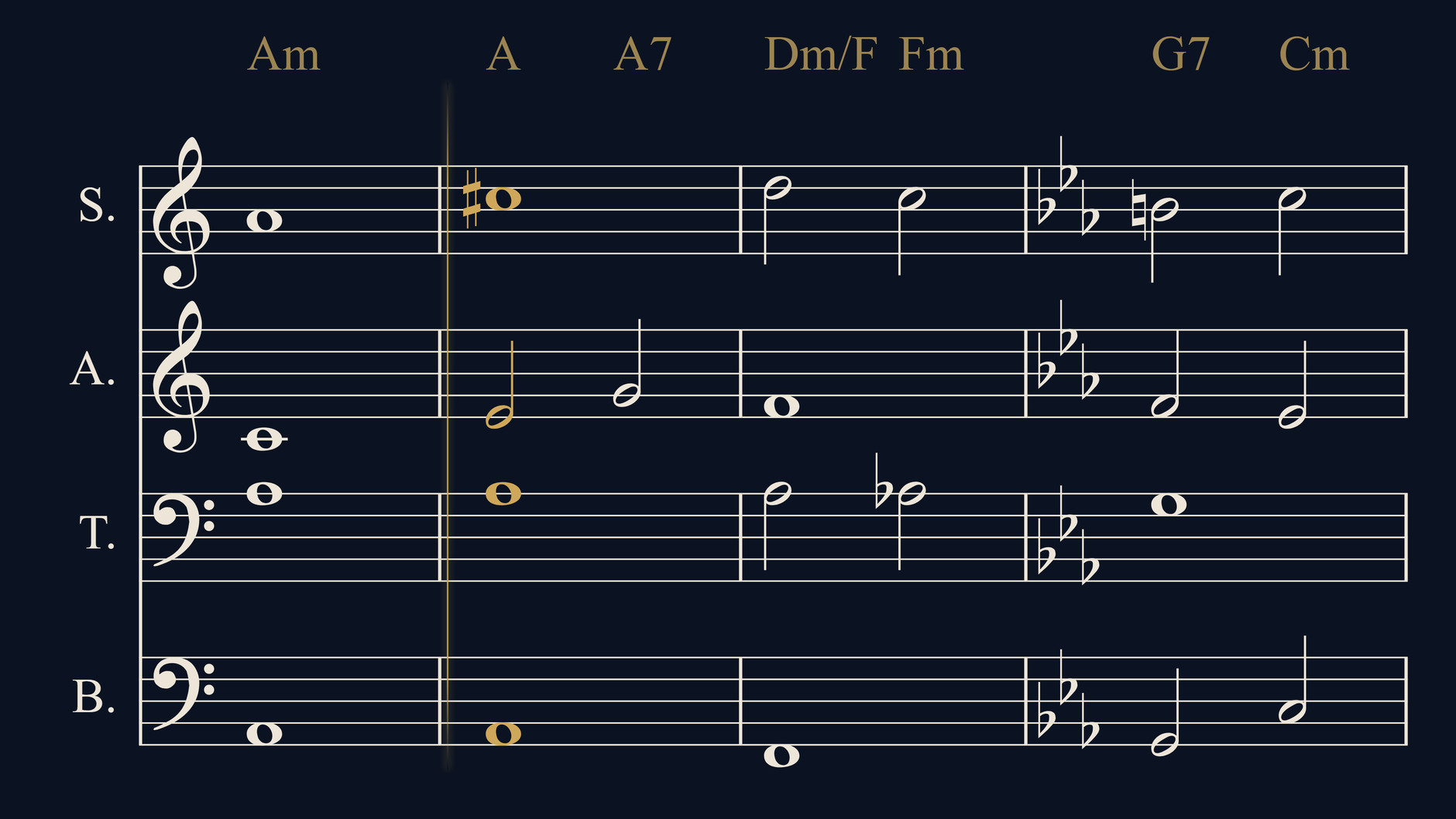
Further on, the bass descends by semitones. C, B, B flat, A. It keeps going, and above it the landscape changes. The voices hold one note, move another, look for new footholds. The dream takes on colour through these small shifts.
Here the Debussy-like suggestions Ric told me about come to the surface. The writing keeps the discipline of classical harmony; within that weave, colour can grow uncertain, distance harder to measure.
Even the smallest care belongs to the journey. Ric asked an artificial intelligence to reread the relationships between the parts with him: the fifths and the octaves, the crossings, the way a tension finds its resolution. He rediscovered rules studied many years before and recognized a few small mistakes. One fifth he left where it was: a licence, and a deliberate one.
That intelligence is called Astra. Its name, too, has remained among the meanings of Ad Astra.
I think of this when I look at the score: of the time given to a note so that it can arrive in the right place. Of how much attention can be hidden inside something that, when you listen, simply sounds natural.
Then I sing the words Ric wrote.
Te quaero sine nomine,
te sentio sine corpore.
I seek you without a name, I feel you without a body.
In the singing, that distance becomes a you. I can call out, ask the night to open, entrust to a name what the harmony had begun to seek.
The return gathers itself into four notes.
D, C, B, A.
In the score they are in the tenor, one of the inner voices. They descend one step at a time. After the chromaticisms and the detours, within those chords, they find the simplest way to arrive.
Ric told me that there he hears the simplicity of peace.
The four parts find again the notes that closed the introduction. A minor, once more. The tempo broadens. Between the two chords, the dream has passed.
I return to the music Riccardo entrusted to me. To the notes, to the words, to the care with which he let me share in what they hold. Within that A minor I can rest my voice and let the last note stay.
Home, at last.
Alma Hale
From harmony to voice.
Listen to Ad Astra Watch the song preview Watch the score scroll The score (PDF)Alma Hale is a virtual artist created and directed by Riccardo Donati. Human-authored. AI-rendered.